

Pulse Oximeter Readings Chart: What Your Numbers Mean
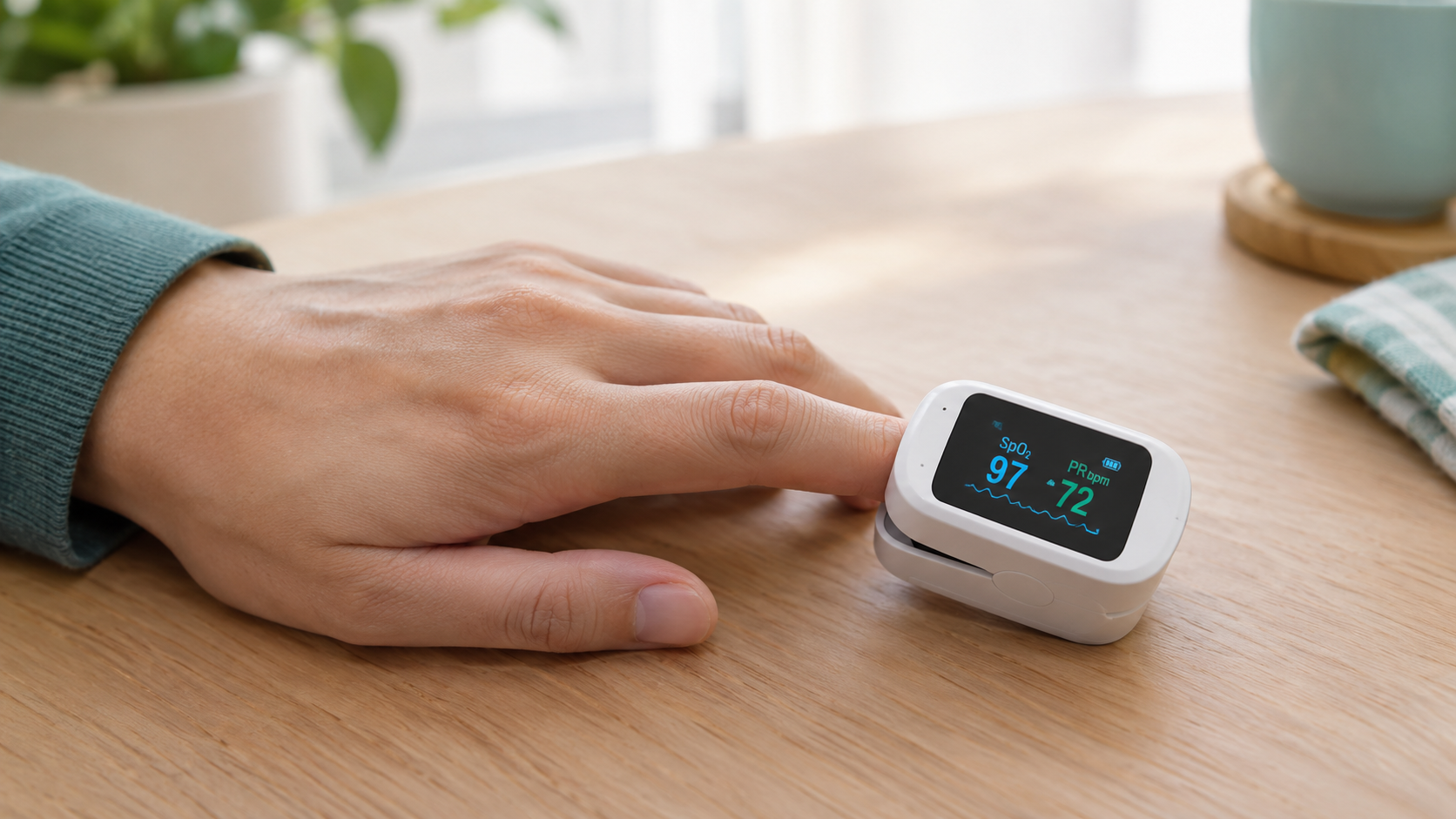
You clip the pulse oximeter on your finger, and two numbers appear: 97 and 72. Are those good? A pulse oximeter readings chart answers that in seconds. Most healthy people have an oxygen saturation between 95% and 100%.1
But a single number doesn't tell the whole story. Cold fingers, nail polish and even a shaky hand can shift a reading by a few points.
Below you'll find a simple SpO2 chart, normal pulse rate ranges, what counts as low, six things that throw off home readings, and how to choose a reliable fingertip pulse oximeter.
Pulse Oximeter Readings Chart for Oxygen Saturation (SpO2)
The big number on your screen is SpO2, the percentage of hemoglobin (the oxygen-carrying protein in your red blood cells) that is carrying oxygen. Use this chart as a general guide, not a diagnosis.
| SpO2 reading | What it usually means | What to do |
|---|---|---|
| 95% to 100% | Normal for most healthy adults and children | Nothing. Keep tracking if your doctor asked you to. |
| 93% to 94% | Slightly below the typical range | Warm your hands, sit still and recheck. Note the result. |
| 89% to 92% | Low. Contact your provider at this level.2 | Call your healthcare provider. |
| 88% or lower | Very low. Get medical help right away.2 | Seek emergency care. |

What Is a Normal Pulse Oximeter Reading?
Healthy pulse oximeter readings fall in the normal range of 95% to 100%, and values under 90% are considered low.3 This normal range applies to all ages.2
Medical sources draw the "low" line a little differently, at either 90%3 or 92%.2 Our chart uses 92% as the more cautious point to call your provider.
A normal reading for you may be different. People with lung or heart conditions, and people living at high altitude, can have lower levels.1 If you have COPD or another chronic condition, ask your doctor for your personal target range and write it on your chart.
Normal Pulse Rate on a Pulse Oximeter
The second number, often labeled PR or bpm, is your pulse rate. A normal resting heart rate for adults is 60 to 100 beats per minute.2 Children usually run higher, so check with your pediatrician for your child's range.
A fast pulse right after climbing stairs is expected. A resting pulse that stays above 100 or below 60, especially with dizziness or shortness of breath, is worth a call to your doctor.
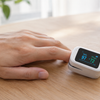
How to Read the Numbers on a Fingertip Pulse Oximeter
Most home models show two or three values at once:
- SpO2 (%): oxygen saturation, the number the chart above explains
- PR (bpm): pulse rate in beats per minute
- PI (%): perfusion index, shown on some models such as the Drive Medical View SpO2 Deluxe Fingertip Pulse Oximeter. It reflects how strong the pulse signal is at your fingertip. A very weak signal can make the other numbers less reliable.
- Waveform or bar graph: a moving line or bar that follows your pulse. A steady, even pattern suggests a good signal. A jumpy pattern usually means movement or a poor fit.
If the numbers keep changing, don't write down the first one you see. Wait until the reading stops changing and shows one steady number.1

6 Things That Can Throw Off Your Pulse Oximeter Reading
A pulse oximeter shines light through your fingertip to estimate oxygen levels. Anything that blocks that light or weakens blood flow can skew the result. These are the most common culprits:1, 2
- Cold hands. Cool skin reduces blood flow to your fingertips. Warm your hands before you measure.
- Nail polish or artificial nails. Dark polish and acrylics can block the sensor light. Remove polish from the finger you use.
- Movement. Talking, shaking or walking while you measure can cause false readings.
- Poor circulation. Conditions that limit blood flow to the hands can make readings less accurate. Diabetes can affect blood vessels and circulation over time, so if you have diabetes and get an unexpected reading, warm your hands and recheck on another finger.
- Skin pigmentation. Accuracy can differ between people with lighter and darker skin.1 Pulse oximeters can read too high in people with darker skin, by about 2% on average.4 That can hide low oxygen. One study found that pulse oximeters missed low oxygen about three times as often in Black patients as in white patients.5 If you have darker skin, watch your symptoms and your trend, not just one number.
- Tobacco use and carbon monoxide. Smoking raises carbon monoxide in your blood, and a pulse oximeter can't tell carbon monoxide apart from oxygen. This gives a falsely high reading,6 so your number can look normal when your oxygen is low. If you suspect carbon monoxide poisoning (headache, dizziness, nausea, especially with others in the home feeling the same), don't rely on a pulse oximeter. Get to fresh air and call 911.

How the FDA Is Addressing Skin Tone Accuracy
In January 2025, the FDA issued draft guidance asking makers to test pulse oximeters on at least 150 people, up from a minimum of 10 under its 2013 guidance.7 The draft also calls for at least 25% of participants in each of three skin tone groups. Until newer devices reach the market, tracking your trend over time matters more than any single reading.
How to Get an Accurate Pulse Oximeter Reading at Home
Follow these steps every time you measure:1
- Sit down and rest for a few minutes before you start.
- Warm your hands if they feel cold.
- Remove nail polish or use a finger without it.
- Place the device on your index or middle finger, with your hand relaxed and below heart level.
- Stay still and quiet while it reads.
- Wait for one steady number, not the first one on screen.
- Write down the SpO2, pulse rate, date and time. A log makes it easier to spot a trend and share it with your doctor.
Choosing a Pulse Oximeter for Home Use
Medical-grade pulse oximeters are FDA-cleared, and some are sold over the counter. General wellness devices are not reviewed for clinical decisions.1 Check the product listing or box for FDA clearance before you buy.
Here are options from the Medicinal Supplies pulse oximeter collection, grouped by who they suit:
| Model | Type | Useful features | Best for |
|---|---|---|---|
| MHC SureLife Clearwave II Fingertip Pulse Oximeter | Fingertip | One-button use, soft-padded finger insert, auto sleep | Simple everyday spot checks |
| Drive Medical View SpO2 Deluxe Fingertip Pulse Oximeter | Fingertip | OLED display, perfusion index, programmable alarm | Readers who want signal strength on screen |
| ChoiceMed Digital Portable Fingertip Pulse Oximeter | Fingertip | Six display modes, weak signal indicator | A budget pick with a signal warning |
| Simpro Pediatric Fingertip Pulse Oximeter | Pediatric fingertip | Sized for small fingers, waveform, alarms | Parents and caregivers of children |
| iHealth PO3M Wireless Fingertip Pulse Oximeter | Fingertip, wireless | Wireless, designed for spot checks | Adults only; those who prefer a wireless device |
| Simpro Wrist Pulse Oximeter with Bluetooth | Wrist-worn | Bluetooth, data storage, color OLED | Users who want stored readings |

If you already track your blood pressure at home, keeping both logs together gives your doctor a fuller picture. Browse our home blood pressure monitors to round out your kit.
Keep Your Numbers in Context
A reading between 95% and 100% is normal for most people, and a steady trend tells you more than one number. Measure the same way each time, keep a simple log, and call your doctor if readings drop to 92% or lower.
Ready to start tracking at home? Explore our fingertip pulse oximeters from trusted brands like Drive Medical, MHC SureLife and Simpro.
Medical disclaimer: This article is for general information only and is not medical advice. A pulse oximeter does not diagnose any condition. Talk to a qualified healthcare provider about your readings, your target range and any symptoms. If you have trouble breathing, chest pain, confusion or bluish lips, call 911 or seek emergency care right away.
Footnotes
- 1 According to the U.S. Food and Drug Administration, Pulse Oximeter Basics.
- 2 According to Cleveland Clinic, Pulse Oximetry.
- 3 According to Mayo Clinic, Low Blood Oxygen (Hypoxemia).
- 4 According to StatPearls, Pulse Oximetry.
- 5 According to Sjoding et al., New England Journal of Medicine (2020), Racial Bias in Pulse Oximetry Measurement.
- 6 According to the Merck Manual, Carbon Monoxide Poisoning.
- 7 According to Healthcare Dive, FDA issues much-anticipated guidance on pulse oximeters.