



Cardinal Health Kendall Silicone Non-Bordered Lite Foam Dressing, 4 in x 4 in
PRODUCT DETAILS
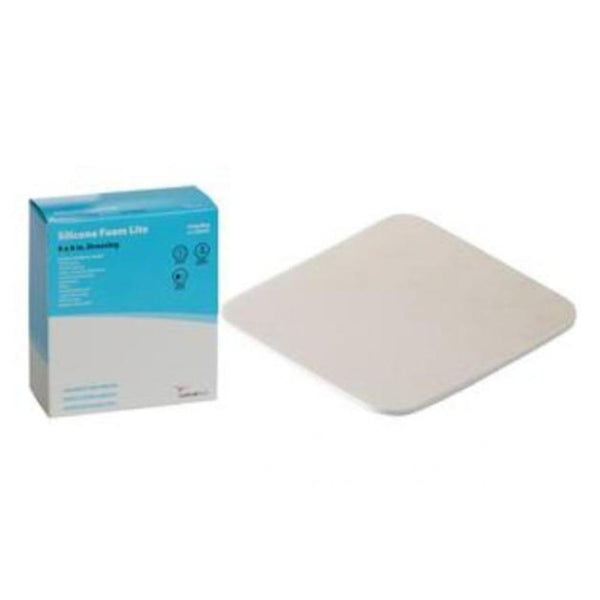
Kendall Silicone Non-Bordered Lite Foam Dressing is a sterile primary wound dressing from Cardinal Health. It is made with an absorbent thin foam pad on a protective film backing and a gentle silicone adhesive, and it is used to protect and absorb exudate from the wound, which helps facilitate a moist environment and may promote healing. The 4 in x 4 in (10 cm x 10 cm) pad is non-bordered and can be cut to size. Sold individually.
Key Features and Benefits
- Sterile, single-use primary dressing
- Absorbent thin foam pad suited to dry to light exuding wounds
- Protective film backing
- Gentle silicone adhesive
- Non-bordered design that can be cut to size
- May be worn for up to a maximum of 7 days
- Not made with natural rubber latex
Indications
May be used for the management of dry to light exuding, partial to full thickness wounds, including pressure ulcers, traumatic wounds, diabetic, venous and arterial ulcers, lacerations and abrasions, finger injuries, blisters, partial thickness burns, epidermolysis bullosa, painful wounds, and radiation skin reactions.
Contraindications
Contraindicated for third-degree burns and lesions with active vasculitis.
Frequently Asked Questions (FAQs)
Q: What is foam dressing used for?
A: Foam dressings are used for moderate to heavily exuding wounds such as pressure ulcers, post-surgical wounds, diabetic ulcers, and traumatic wounds. They absorb fluid, protect the wound, and support healing.
Q: How often should foam dressings be changed?
A: Foam dressings are typically changed every 3 to 7 days or as needed depending on the amount of exudate. Always follow the wound care professional’s recommendations.
Q: How do foam dressings work?
A: Foam dressings absorb exudate while keeping the wound moist. They help prevent infection, reduce pain, and protect the wound from external contaminants.
Q: Can foam dressings be used on infected wounds?
A: Some foam dressings are formulated with antimicrobial agents suitable for infected wounds. Always consult with a healthcare provider before applying to an infected site.
Q: Are foam dressings suitable for dry wounds?
A: Foam dressings are typically not recommended for dry wounds because they are designed to absorb moisture. Hydrogel dressings may be more appropriate for dry or necrotic wounds.
Q: Do foam dressings stick to wounds?
A: Non-adherent foam dressings do not stick to wounds and are gentle during removal. Adhesive foam dressings stick around the wound, not directly on it.